Wednesday, 27 May 2015

Vintage Fashion - Mod Men, 1960s style in England


The mod fashion of the 1960s, which I touched on recently here, was not just for women.

With WWI and WWII men's fashion, especially in England, had taken even more of a back seat than women's fashion in the first half the last century.  The wealth and relative peace of the 1960s was an opportunity for change and optimism  - a revolution was coming! The rock and roll of the 50s evolved into "Rock"  and of course "Pop", and these rock stars wanted to look good, getting rid of their working class image of frayed shirts, cloth caps and dirty fingernails.

the Beatles in suits, 1963
The Beatles, 1963
The Beatles were epitome of the mod look.  Four working class lads from Liverpool in stylish suits were an inspiration for a generation.  Adolescents followed their style lavishly, and for a while it was dismissed as purely a teen fad.  Working class Englishmen, who had always had a fear of anyone who dressed too well, followed the trend, and soon every man could be part of the 'peacock strain' that had run through the aristocracy for years.

Spike Milligan gets fitted for a suit
Even comedian Spike Milligan, who once called himself, "the worst dressed man in Britain" got him self fitted out for a suit at Blade's, a hot  London salon started in 1963.

Blades' began with (James) Bond style clothing - Blade's was the name of Bonds club, and also the name given to Victorian Dandies - but soon began their own look "trying to lead fashion, not follow it."  Blade's designer Eric Joy began as a tea boy and apprentice in Saville Row in 1947, and in the early 60s he set up on his own, with backing from one of his younger, wealthier client's Rupert Lycett Greene, who also became a designer in the business. In 1965 photographer Cecil Beaton, a regular customer of Blades, stated "it's a marvellous combination of Carnaby Street Pizazz and Saville Row".

Carolyn Charles was another designer with a hot fashion house.  She left art school after two years and worked as an apprentice to a London courtier, a sales girl for Mary Quant and an assistant to a fashion photographer before setting up on her own at only 22.  Her big break came when buyers for Macy's in New York loved her designs and launched her in the US.  It would seem she had no more world's to conquer, until Ringo Starr came along.  Ringo loved his girlfriend's swinging dresses and asked Ms Charles to make him six swinging suits.  He soon married his girlfriend, hairdresser Maureen Cox, in one of those suits.

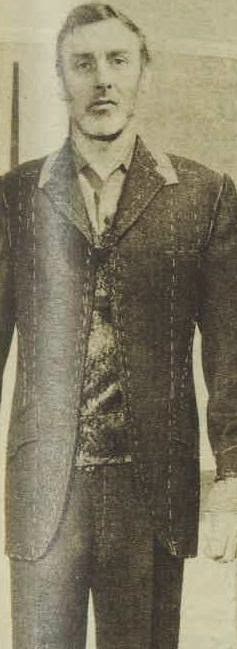
If you've designed for Ringo, word gets around, and Ms Charles, used to designing for women, including Cilla Black and Hayley Mills, then found herself making an Edwardian style midnight blue suit for Aussie Actor Peter Finch, "and he looks marvellous in it," said the designer.  Dancer Rudolph Nureyev then ordered a seal skin coat, and rolling Stones bad boy Mick Jagger a few corduroy suits.

Mick Jagger and Aussie actor Peter Finch getting fitted for suits at Carolyn Charles’ London salon, 1965
Another hot London designer, and one himself who wanted to get away for the working man image, was Glaswegian John Stephen.  He had a chain of shops stretching down Carnaby Street, off Piccadilly - 15 shops in central London by 1967 - landing him the title "The King Of Carnaby Street" and  "The £1m Mod" in the media. Stephen worked on a formula - including short runs of colored jeans and Tees, simple three button jackets and collarless shirts, loud music, attractive staff with a free- and easy approach, and bright bold exteriors - to sell men's clothes that were right in fashion, and appealing to men from teenagers wanting a cool tee to the man who wanted a fashionable suit for the races.
60s Pop singer Mick Rowley in red leather waistcoat
Pop singer Mick Rowley in red leather waistcoat

Musician Peter Martin in a cord Norfolk Jacket by John Stephens, 1965
Musician Peter Martin in a cord Norfolk Jacket by John Stephen, 1965
John Michael, often called "the Mary Quant of menswear" was the other major London designer in the mid 60s. I quite like the leather jacket and hat combo, but not sure about the blue knit jacket.....

vintage Leather coat with Prussian collar and cord hat
Leather coat with Prussian collar and cord hat

White reefer jacket and navy fisherman's knit jacket

Caramel double breasted reefer jacket & beige jacket with prussian collar
I don't know about you, but I would love to see more young men in suits today!

The Latest in Hats, 1952

After having yet another skin cancer removed from my face, I have decided I really, REALLY, need to wear hats more - not just to the races and at the beach. Even a hat with a little brim can help keep the sun off your scalp, one plae where it is difficult to apply sunscreen! Today some hat inspiration from the 1950s.

In 1952 French designers  liked grey and white for daytime wear, and this included hats.  Dior had a grey straw hat swathed in matching grey silk.

Dior's grey straw and silk cap

Friday, 22 May 2015

Feeling blue? Put on your trench coat...

I love these blue suits from 1965, and in particular, the pale blue trench coat.  I don't have much use for coats here in North Queensland, but I think a pale blue cotton trench would see some use....

Blue Double Breasted Trench Coat

Thursday, 21 May 2015

Vintage Pattern - Cute Crochet Cap

Today a little crochet pattern for a winter beanie from May 1965 (Australian Women's Weekly).


I am pretty sure dc is double crochet, and there is a good tutorial here (which I may actually follow one day...)

Wednesday, 13 May 2015

Vintage Fashion - Mod Fashions still Rockin'

Sixty five years ago, straight from London, the look was MOD.

vintage 1960s mod fashions made in Australia

vintage 1960s mod fashions made in Australia


It's hard to believe it was half a century ago, as Mod fashion are still as MODern looking today.  Just take a look at Christian Dior Spring 2015 Couture Collection -

Thursday, 7 May 2015

Vintage Beauty - Janet Blair


Today another vintage beauty - actress Janet Blair.

Born as Martha Jane (or Jean) Lafferty (she took her acting surname from Blair County, Pennsylvania) in Altoona, Pennsylvania on 23 April 1921.

Ms Blair began her acting career on film in 1941 in 'Three Girls About Town',a Columbia comedy film also staring Joan Blondell and Binnie Barnes.

In 1942, with Fred Astaire in 'You'll never get rich,' as well as 'Blondie Goes to College', 'Two Yanks in Trinidad', 'Broadway' and 'My Sister Eileen', with Rosalind Russel, while being placed under contract to Columbia Pictures. During World War II, she made a string of successful pictures. Her singing and dancing made her a popular entertainer on several bond-selling tours, and after filming 'Once Upon a Time' with Cary Grant she went on a tour of American Army Camps.

In 1943 she married Sargent Louis Ferdinand Busch, US Army, whom she met while singing with the late Hal Kemp's band, where Busch was piano player and arranger. Ms Blair bought an interest in a music publishing business in Los Angeles and contracted all of Kemp's musicians.

1943
In 1944 Ms Blair filmed the technicolor 'Tonight and Every Night', where she played Rita Hayworth's best friend. In the late 1940s, she was dropped by Columbia and did not return to pictures for several years.

1944

1944

In 1946 she filmed 'Gallant Journey' with Glen Ford.

Janet Blair and Glen Ford, 1946

Janet Blair in 1946
1946 in Gallant Journey
In 1947 Columbia loaned Ms Blair to United Artist for 'The Fabulous Dorsey's"  a film about the famous dance-band leaders. 

Janet Blair in 1947
With red hair in 1947
In 1948 Ms Blair appeared in three movies, including the film noir 'I love trouble', and also appeared on television in 'The Ford Theater Hour.'

Blair played Nellie Forbush in a touring production of Rodgers and Hammerstein's South Pacific; she starred in that musical for over 3 years, and claimed to never have missed a performance. She was also seen in a national tour of Mame, with Bells Are Ringing and Follies among other theatre credits.  During the tour, she also got married to second husband, producer-director Nick Mayo, and they became parents of Amanda and Andrew. They divorced in 1971.

She also starred on Broadway in the 1953 play 'A Girl Can Tell', by F. Hugh Herbert. It ran for 60 performances at the Royale Theatre.

She appeared on television on various variety shows including "The Ford Theatre Hour," "The United States Steel Hour," "A Connecticut Yankee," "One Touch of Venus" (in which she played the title role), "The Chevy Mystery Show," "The Outer Limits," "Destry," "Marcus Welby, M.D.," "Fantasy Island," "The Love Boat," and "Murder, She Wrote" ( her last TV appearance, 1991).

Blair recorded an album in the early 1960s entitled 'Flame Out' - a collection of ballads like "Don't Explain" and "Then You've Never Been Blue".  

the record!
She also made a rare dramatic appearance in the 1962 British horror film Night of the Eagle (Burn witch burn), as Tansy Taylor.

Blair as Tansy Taylor
She died at the age of 86, of complications from pneumonia, at Saint John's Health Centre in Santa Monica on 19 February 2007.

Monday, 4 May 2015

Lane's Emulsion - It's famous because it's good

I came across this ad the other day - from The Australian women's Weekly, 29 July, 1950 - and I thought it was quite cute.


I had never heard of Lane's emulsion before - it's not something I grew up with as I did with many other vintage products I see advertised - so of course I had to find out a bit more about it.

Lane's emulsion contained a great deal of cod liver oil - which would have given it a strong fishy smell - beechwood creosote (sounds safe!), mineral lime, soda, brandy (yum), vitamins, fresh egg yolk and some secret ingredients.

It was invented by Edward Lane, a chemist from Oamaru, New Zealand, in 1898, and was later manufactured in the town's Harbour Street (now part of the Oamaru Historic Precinct) in a building which still bears the product's slogan "It's famous because it's good".

 'It's Famous Because It's Good'.
Mary Scott, the grand-daughter of pharmacist Edward Lane, who invented the tonic, recalls as a child visiting the Lane's Emulsion factory. "As a child, I was let into the factory by a very small door (which is still there in the main door). The building seemed enormous to me as a child, smelling of cod liver oil and creosote and the smell clung to my grandfather's clothes," she said.   Mrs Scott said she could not remember whether or not she liked her grandfather's tonic, but said her father was quite partial to it "but that may have been because of the brandy".

Sold in clear glass bottles, the thick cream-coloured liquid was fed to generations of New Zealand children and was also sold overseas.  Blogger Don Donovan described it as "a cream coloured potion of the consistency of melted ice cream containing ghastly stuff like cod liver oil."  My mother remember's her and her siblings lining up for a spoon of cod-liver oil once a week - something she swore never to inflict on her own children!

Originally claiming to be "a reliable remedy for pulmonary ailments", the product was still in production until 1984. Oamaru company Crombie and Price, which bought Lane's Medicine in 1971, still holds the rights and recipe to the product.

source
In 2011 The North Otago Museum created a "Re-create the smell of Lane's Emulsion" competition. Oamaru's "Victorian domestic goddess", Marise Martin, won the competition , with the following recipe -

• Big proportion of oil of cod livers
• Healthy dose of brandy
• Dash of meade
• Spoon of honey
• Generous dose of milk of magnesia
• Selection of fine herbs marinated in cider vinegar
• 1 fresh egg yolk
• Secret ingredients

Even her husband did not want to taste it though, so I doubt it will be making a comeback any time soon.

Deb