Still looking at World War one, I have moved onto another sometimes under looked participant - the horse. Although now of course there is the famous play and
movie, which despite some bad reviews I think is worth watching, especially with the kids, and does a lot to help people stop and think about what horses went through. My kids (7 and up) love it.
 |
| Scene from the movie War Horse |
During WWI horses were essential. Cavalry or mounted units were often the first
stage of military offensives and horses were also used for carrying messengers
and scouting ahead, as well as pulling artillery, ambulances, and supply
wagons. Horses were better than motor
vehicle or bicycles for getting through thick mud, and over rough ground and
hills. They also boosted the moral of
the troops – imagine the comfort of seeing or petting a living animal after a
terrible day in the trenches.
 |
A soldier in the New Zealand Mounted Rifles Brigade reading
a letter from home c. 1915
|
Australian soldiers primarily rode ‘Waler’ horses.
Walers
were not a breed, it was simply a nic- name that had developed to mean horses that
came from ‘new South Wales’, as Australia was known before Federation in 1901. The British Indian army had purchased large
number of Australian horses in the late 1800s, and they only bought the best. Pastoralists therefore selected the best local
stock and imported the best of English and Irish thoroughbred bloodlines, breading
the Australian stock horse. The Indian Officers in speaking of these horses called
them "Walers" because of their New South Wales origin. Owning one in
India became a status symbol whether used as a military charger, for polo or
for pleasure riding. To own and ride one was paramount to being behind
the wheel of a sports car today. The ‘Walers’
were also purchased in large numbers as mounts for Cavalry Units from New
Zealand, Britain, the Dutch East Indies, the Philippines and Japan. The term "Waler" was used from that
time to designate all Australian horses that went to war, regardless of whether
they came from Queensland, Western Australia or anywhere else in between.
 |
| My Australian Stock horse, Tana (Tariqua Tiana) |
I have an Australian Stock horse. She is beautiful, quiet and solid. She is about 16 hands with a glossy chestnut coat. Although she does get one feed a day on top
of grazing, she has kept her condition really well, especially compared to the thoroughbreds
she boards with. She is great to ride, especially
through the bush, but I imagine she would also be suited to pulling a carriage
or cart. The English cavalry officer, Lieutenant Colonel RMP Preston, summed up
the animals' performance in his book, The Desert Mounted Corps:
“(November 16th, 1917) The
operations had now continued for 17 days practically without cessation,
and a rest was absolutely necessary especially for the horses. Cavalry Division
had covered nearly 170 miles ... and their horses had been watered on an average
of once in every 36 hours .... The majority of horses in the Corps
were Walers and there is no doubt that these hardy Australian horses make the
finest cavalry mounts in the world “
 |
Sergeant Spencer Gwynne of the
10th Light Horse Regiment sitting on his horse as it lies on the ground. Many
soldiers from the light horse regiments taught their horses to lie down, a very
useful form of protection if caught in the open under fire from an enemy.
|
By 1914, when Australia joined the war against Germany Australia
initially promised Britain four regiments of Light Horse under the arm of the Australian
Imperial Force (AIF), that is 2000 men, to fight. By the end of the war, 16 regiments would be
in action, plus regiments of militia volunteers. The Light Horse were seen as
the "national arm of Australia's defence" and young men, most from
the country, flocked to join, many bringing their own horses, if they met
government standards, and sometimes dogs. If a horse met army standards,
it was bought by the Commonwealth for about £30 ($60), branded with the Government broad arrow and initials
of the purchasing officer, and an army number on one hoof.
 |
Trooper SJ Arbuthnot 8thALH in the Uniform for the light horse 1914 to 1918
Jacket khaki - wool serge, with accoutrements.
Bandolier, Water Bottle, Haversack.
Waist belt, Ammunition Pouches.
.303 Rifle and Pat 07 Hooked Quillon Bayonet
Breeches - Bedford Cord.
Leggings and boots.
Spurs & Butterflies.
|
The recruits had to past a medical test and a riding test before they were accepted. Once sworn in they were issued with their uniforms - the normal AIF
jacket, cord riding breeches, and leather "puttee" laggings bound by
a spiral strap. They wore an Australian slouch hat and a distinctive leather bandoleer that carried 90 rounds of ammunition, as well as ten rounds in the
.303 ("three-oh-three") rifle slung over the shoulder and another 50
rounds in pouches on the belt, which also supported the bayonet and scabbard. The light horse trooper had to carry everything
on him and his horse for living and fighting, so extra clothing, food, water and personal possessions were in a canvas
haversack carried over the shoulder.
 |
| Sergeant F.G.H.Garrett served as a member of the 3rd Australian Light Horse Regiment in WWI,and saw action at Gallipoli and the desert war in the Sinai and Palestine. The Light Horsemen were required to be almost self sufficient, as can be seen by the amount of gear on the saddle, and were required to be on patrol away from base camps for extended periods of time. |
In camp, the horses were tethered by head and heel ropes
between long ropes called picket lines with its saddle and equipment placed in
front of it for quick access. In Gallipoli crude stables were made in dug outs. The men slept close by in trenches, or in bell tents - eight men
to a tent, feet to the centre like the spokes of a wheel.
 |
GALLIPOLI, 1915. Dugouts used
as stables showing horses standing inside the sand-bag entrances with their
attendants.
|
 |
| Photo taken by Troop (later Lieutenant) G.S. Millar depicting the Light Horse camp at Maddi, Egypt, 1915, prior to Gallipoli, showing horses tethered with head and heel ropes between longer ropes known as picket lines. The saddle and other equipment associated with each horse was kept in front of the animal. |
The horse was carefully fitted with a special military
saddle, designed to carry all the equipment with the least discomfort. It was
built on a pair of felt-padded wooden "bars" which sat on either side
of the horse's spine. These were joined by steel arches with a shaped leather
seat laced between them. Across the front was strapped a rolled greatcoat and
waterproof ground sheet. The man's blanket was usually spread under the saddle
on top of the saddle blanket . Mess tin, canvas water bucket and nosebag with a
day's grain ration for the horse, were slung at the back of the saddle. There
was also a heel rope, removable length of picket line and a leather case with
two horseshoes and nails. When fully loaded, the horses often carried between
130 and 150 kg, often for long distances, in searing heat, and without water
for days at a stretch.
 |
| Horse and trooper of the ALH c. 1915 |
It’s no wonder many horses died – about 70,000 Australian
horses during WWI. It has been estimated
that 1 million horses went to France between 1914 and 1918, and only 62,000
made it out alive. (WWI also killed some ten million fighting men, almost
800,000 of them British, and over 60,000 of the Australian, which was a lot considering
416.809 men enlisted, and from a population of fewer than five million. 156,000
Australians were also wounded, gassed, or taken prisoner). Some horses didn’t even survive the trip to
Egypt and Gallipoli, six weeks of sliding around decks or in cramped conditions
below decks. Once they arrived, the cavalry horses faced rifles, bayonets and
machine guns, but they generally survived better then the pack animals and the
artillery horses and mules, who burdened with a load and stuck in mud and
barbed wire up to their bellies. Conditions
were severe for all horses at the front though; they were killed by artillery
fire, suffered from skin disorders, and were injured by poison gas. Horses
eat constantly, and finding enough food
was a major issue, and many horses starved. Hundreds of thousands of horses
died, and many more were treated at veterinary hospitals and sent back to the
front.
 |
British soldier
wearing a Small Box Respirator, introduced in 1916, checking the gas masks of
two horses pulling a service wagon.
|
Gradually over the course of the war, came the development
of tanks, which would ultimately replace the cavalry, although horses still played a significant role
throughout the war. It is often said that the Allied blockade that prevented
the Central Powers from importing horses to replace those lost, which
contributed to Germany's defeat.
 |
| Light horse Memorial, Canberra, Australia |
Several memorials have been erected to commemorate the
horses that died. Artists extensively documented the work of horses in the war,
and horses were featured in war poetry, such as this one inspired by the
feelings of Australian Light Horsemen who, because of quarantine regulations,
had to leave their horses in the Middle East on their return to Australia:
Farewell Old Warhorse
(Author unknown)
The struggle for freedom has ended they say,
The days of fatigue and Remorse,
But our hearts one and all are in memory today,
We are losing our old friend, the Horse.
The old quadruped that has carried us thro'
The sand ridden caravan track
And shared in the charge of the gallant and true
With the boys who will never come back.
Oh those long weary days thro' a miniature hell
Short of water and nothing to eat,
Each hour we climbed down for a few minutes' spell
And dozed safe and sound and your feet.
When the enemy shrapnel broke overhead,
As we passed up that Valley of Death,
You never once slackened in that hail of lead
Though the boldest of all held their breath.
But we never forgot you, old Comrade and friend,
When the QM Dump hove in sight.
What the Buckshee to Gippo's we scored in the end
And your rations were doubled that night.
Then came the long journey, the greatest of all,
The cavalry stunt of the world.
The sons of Australia had answered the call
And the Ensign of Freedom unfurled.
And now we are leaving you footsore and worn
To the land where the Mitchell grass grew,
Where you frolicked like lambs in the sweet scented morn,
To the song of the Dismal Curlew.
So farewell to the Yarraman old warhorse, farewell,
Be you mulga bred chestnut or bay.
If there's a hereafter for horses as well
Then may we be with you some day.
|
 |
| Two Anzac mounted troopers share a quiet “Smoko” out of the heat of the midday sun – under a horse, on the plains of Southern Turkish Palestine c.1917. |
For more photos go to Tumblr. I also love The Return to Snowy River (Man from Snowy River II) for a look at Australian horses and those selected by the British Army for India.
Sources and further reading:




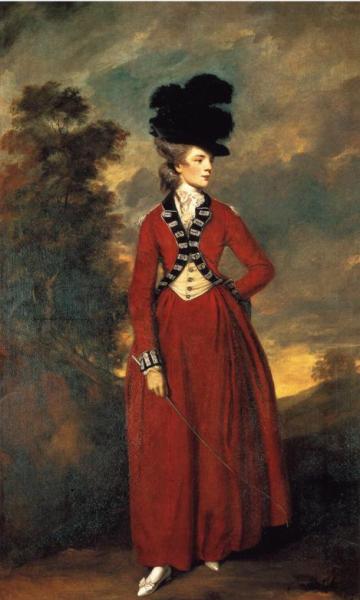

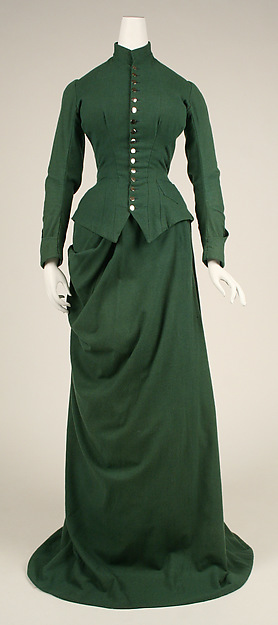
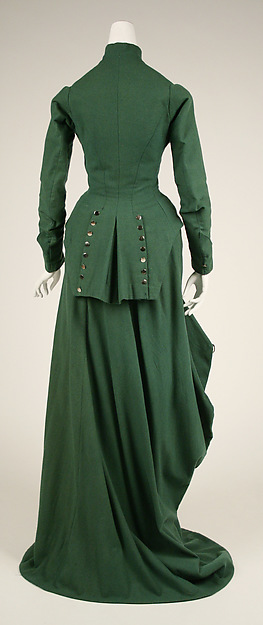
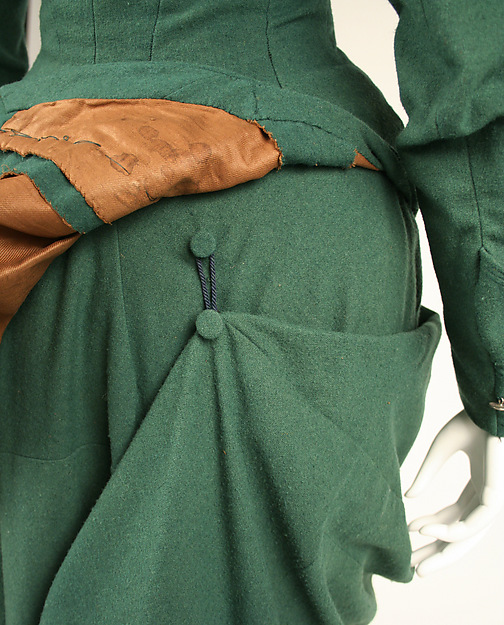
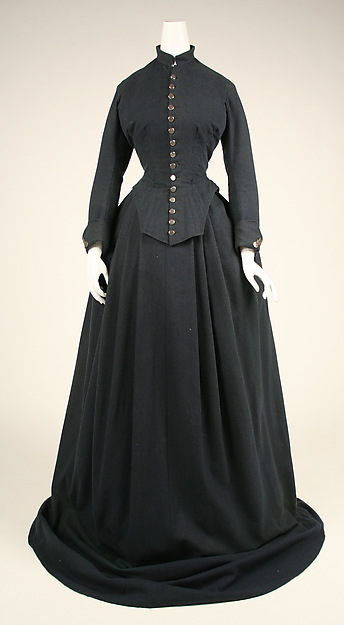
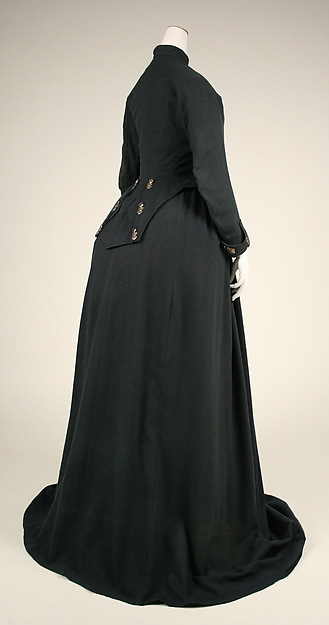
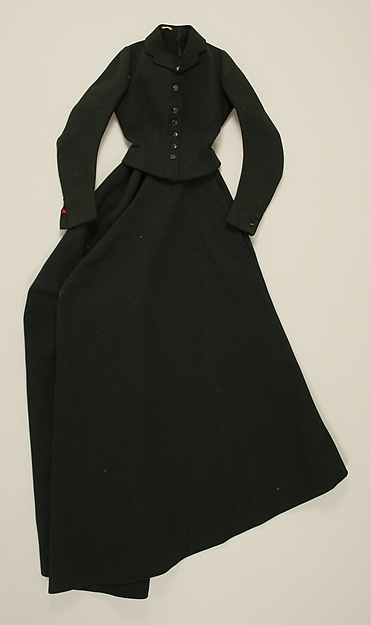
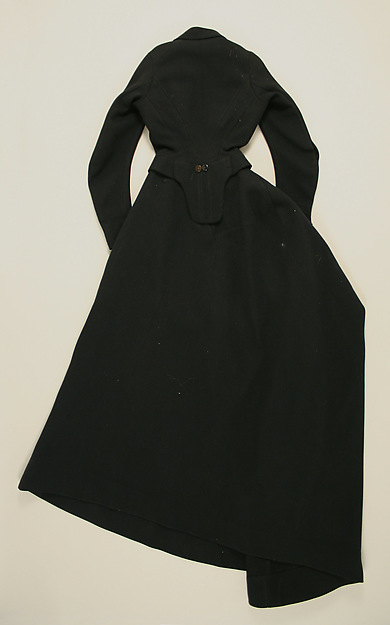
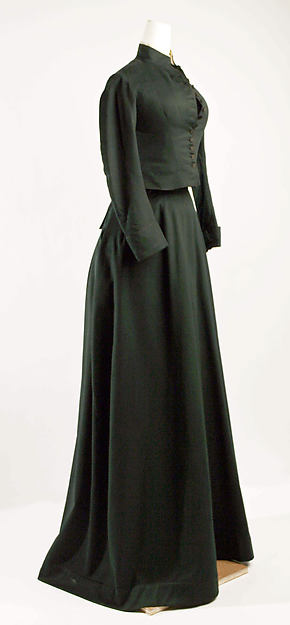
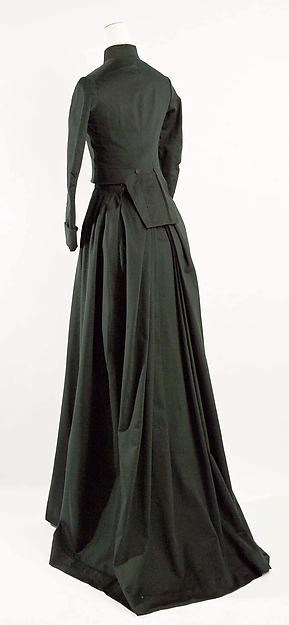
 Different riding habits were also worn for different occasions. One for use when riding in the park, a simpler version for summer wear, and those that hunted had a distinct habit for hunting. They were all highly tailored however, often with a jacket with a basque bodice - form fitting with boning, fully darted and high collared, with decorative front buttons and a separated small tail.