In our house the Easter Bunny arrives bright and early on Easter Sunday. Unfortunately it seems to rain each year on that day, so he likes to wait until the rain clears, then he can hide the chocolate foil-covered eggs in the garden. This morning that was about 8am, by which time the children had been up for two hours.
Anyway, he finally arrived - I was sure I saw his tail disappear over the fence. About three minutes later all the eggs had been discovered, and shared out evenly, as one had got more than all the others. Our garden is quite small, and Easter bunny doesn't like to go in the pool enclosure in case he falls in. I remember the hunt taking a lot longer when Easter Bunny had an acre to hide eggs in!
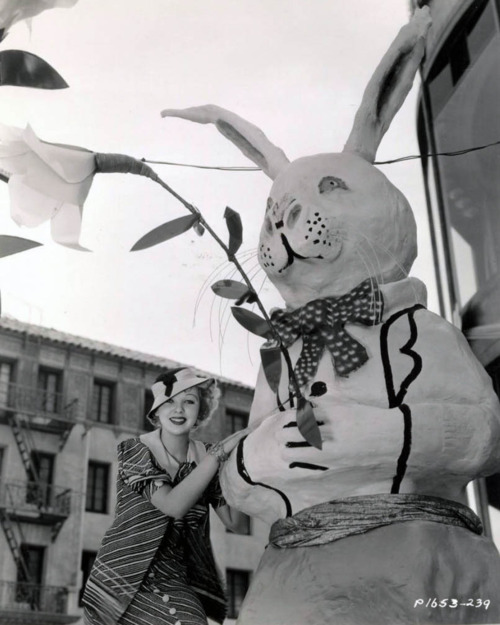
After the Hunt, 1930s
Eggs have always been a symbol of fertility, and rebirth - decorated ostrich eggs, and representations of ostrich eggs in gold and silver, were commonly placed in graves of the ancient Sumerian's and Egyptians as early as 5,000 years ago. Decorated eggs at Easter may have originated when the early Christians of Mesopotamia stained eggs red at Easter in memory of the blood of Christ shed at his crucifixion. Combine this with the fact that eggs were originally forbidden during Lent in Western Christianity, and you get a reason for using up all your eggs - decorating them and hiding them for the children, or perhaps young women hoping to have a child to find, makes perfect sense!
Rabbits and hares, with their large litters born at the start of spring, were also a common symbol of fertility, so it's not surprising that they entered into Easter traditions. The Easter Bunny was first mentioned in Georg Franck von Frankenau's 'De ovis paschalibus' (About Easter Eggs) in 1682, and referred to an Alsace tradition of an Easter Hare bringing Easter Eggs. The first edible Easter bunny was made out of pastry and sugar in the early 1800's, and the bunny was said to lay colourful eggs in the nests that children made out of their hats - which of course then morphed into baskets. The Europeans brought the German Easter Bunny traditions with them to America in the 1700's.
Another tradition taken to the New World was that of egg rolling , where children roll eggs down hillsides at Easter to see whose can roll the furthest This tradition was taken up at the White house by Dolley Madison, the wife of President James Madison, in 1814, before being beng abandoned for some years until it was revived by Mamie Eisenhower during her husband's term in office, and she allowed black children to attend for the first time. The Egg Roll tradition continues to this day, although the Egg Roll is now a race, where children push an egg through the grass with a long-handled spoon.
We keep our boiled eggs for breakfast - I cook them and the children get to decorate them before eating them. As I am very bad a dying eggs (I am good at fingers though), this works well for us. Our chocolate eggs never last long enough to roll anywhere.
Happy Easter! Did Easter Bunny come to your house?
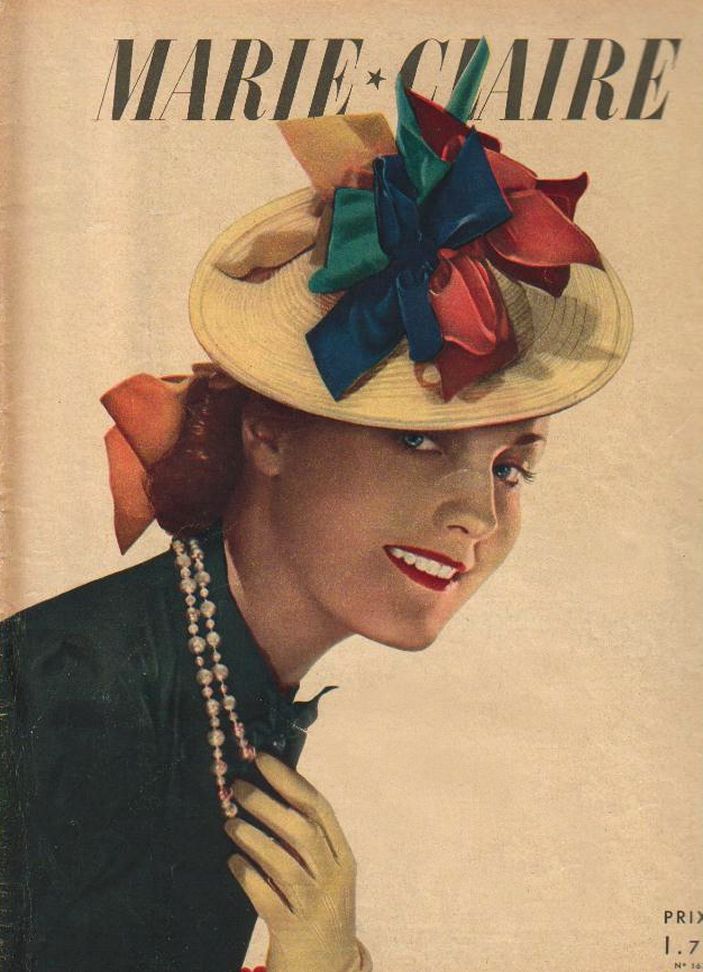
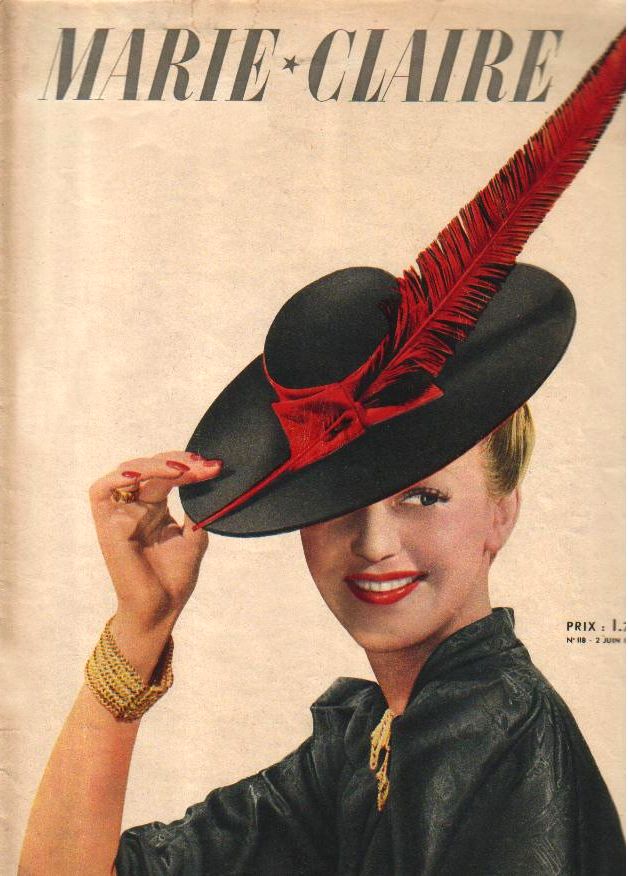
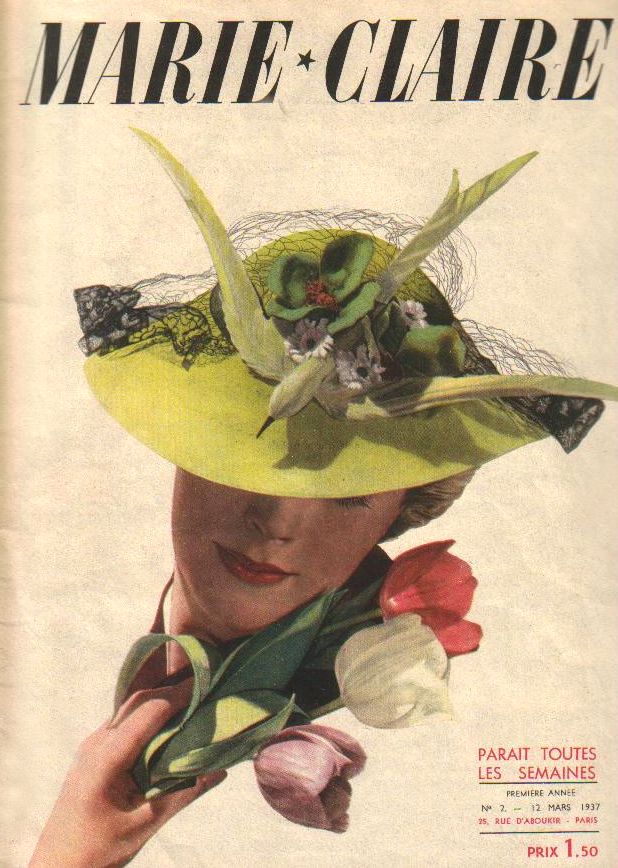
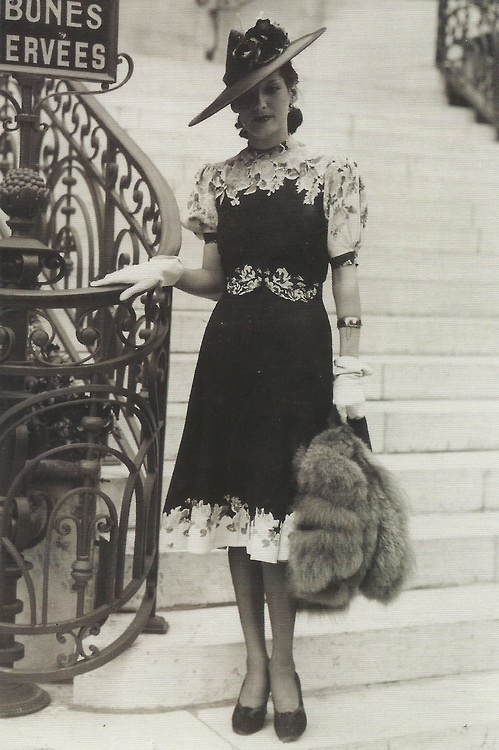
The wearing of new hats and clothes to Easter church services and the parade afterwards is a tradition that goes back to at least the 16th century, and signified redemption, renewal and the end of Lent, a time of fasting and abstinence. It was also Spring in the Northern Hemisphere, the perfect time to get a new hat ready for summer.
During the depression of the 1930's, with it's 30% unemployment rate, not many people could afford new clothes, and a new, or refurbished, hat was a much cheaper option. The word bonnet, although used in the 1800s, did not enter into Easter until 1948, with movie musical of 'Easter Parade' by Irving Berlin. 'In your Easter bonnet, with all the frills upon it,' sang by Judy Garland sounded better that "In your Easter Hat, with all the frills and that."
Making your own hat was even cheaper than buyin one, and crochet hats became popular in the 30s. This polkadot hat would be lovely for Easter. You can buy the pattern here.
For me this would be the perfect outfit for Easter Sunday - a pretty hat with flowers, but not too tizzy, and a dress demure enough for church, but quite stunning. Don't you think?
The butterfly has always been a symbol for change, and metamorphosis - something particularly poignant at Easter. This portrait of Princess Margaret in Ballgown featuring butterflies was taken in August 1930, when she became the Countess of Snowdon - changing from a gangly young woman into a beautiful princess.
Italian Elsa Schiaparelli (1890-1973) was the most significant proponent of surrealism in fashion. She collaborated with many surrealist artists, but especially with Salvador Dali, Max Ernst and Man Ray, and shared many Surrealist views with these artists. She was well-known for her whimsical and surrealist designs especially for evening wear, dinner jackets and accessories including jewellery, hats and shoes. In Summer 1937 she presented the Metamorphose collection.
Like an ugly caterpillar metamorphosing into a beautiful butterfly, so Schiaparelli's designs could transform an ordinary woman into an extraordinary one. Like herself many of Schiaparelli's client's were striking and chic, but not considered beautiful compared to the ideal of the time. This evening dress design from the summer 1937 collection features a lively butterfly print on silk fabric printed exclusively for her.
Schiaparelli featured the butterfly print on other pieces in her summer collection as well, including parasols and her new waltz-length evening dresses.
Perhaps the inspiration for this dress, worn by Paula Abdul in 2009. The Madame Butterfly dress is a silk chiffon hand pleated wrap dress in butterfly print by Lana Fuchs.
Yesterday's post on the history of rain wear featured a photo of a very young Joan Crawford in the 1927 movie 'Twelve Miles Out.'. Today, in continuing with the rain theme, and featuring Joan Crawford, I look at the 1932 South Seas drama film directed by Lewis Milestone, 'Rain.'
Crawford was loaned out by MGM to United Artists for this film, in which she stars as 'lady of the night' Sadie Thompson. Walter Huston is Alfred Davidson, the missionary who wants to reform her. Although her makeup is heavy handed, I think Crawford still looks great, and her acting is very good - she totally owned the part and brought Sadie vividly to life. Variety magazine at the time disagreed, "It turns out to be a mistake to have assigned the Sadie Thompson role to Miss Crawford. It shows her off unfavorably. The dramatic significance of it all is beyond her range.... [Director] Milestone tried to achieve action with the camera, but wears the witnesses down with words. Joan Crawford's get-up as the light lady is extremely bizarre. Pavement pounders don't quite trick themselves up as fantastically as all that." Rain was not well received at the box-office either, perhaps not the cheery movie the depression era audience was wanting.
The plot of the film is based on the 1923 play Rain by John Colton and Clemence Randolph, which in turn was based on the short story "Miss Thompson" (later retitled "Rain") by W. Somerset Maugham. Gloria Swanson starred in the 1928 silent film version titled 'Sadie Thompson' and in 1953 a further remake was made with Rita Hayworth entitled 'Miss Sadie Thompson.'
The opening scene sees a troop of American Marines in wet weather gear marching in the mud through a torrential downpour, singing a witty ditty about the weather and the South Sea Islands. While they interact with he natives, and local Joe Horn, we find they are on the Island of Pago Pago. We then see passengers from a ship arrive at the Island for an afternoon visit - they are all faceless, and instead we see their passports and hear their voices, indications of their nature none the less.
"I wonder why it must rain. Doesn't it ever stop?"
The passengers include socialite Mrs Robert McPhail and her husband Dr McPhail and Mr and Mrs Alfred Davidson, 'professional reformers'. Much to their disappointment they need to stay on the Island for a couple of weeks, as there is a possible cholera outbreak onboard. The other passenger, Ms Sadie Thompson, is not so disappointed. A woman of the night, she 'likes the boys here', and nicknames one of them 'Handsome' - Sergeant Tim O'Hara, who of course then falls in love with her. Sadie entrance is well done - we see her jewelled hands, then her high heeled feet and fish-net stockinged legs, and finally her face, which, as I mentioned earlier is over made-up with exaggerated eyebrows and lips and lots of eye shadow, with a cigarette between her lips. It's quite a look, and it screams 'hooker'.
The photography is brilliant, with lots of artistic shots of the rain and clouds, and then finally the sun breaking through. Horn and Dr McPhail have a discussion about the lives of the natives and the reformers on board the ship and back in Chicago, while walking back to Horn's house, where they all will stay. Mrs Davidson says the ladies must sew mosquito nets tomorrow as the bites will be horrendous - but they couldn't possible sew on the Sabbath, and protect themselves right away. Meanwhile Sadie has unpacked her liquor and is showing the marines how to do the latest dance from the States with willing partner, Quartermaster Bates from the ship. Mrs Davidson looks on disaprovingly.
Apparently dancing is not allowed on the Sabbath either, and Mrs Davidson gets very cross. As Bates leaves to return to the ship, we see the first glimpse of Mr Davidson's attitude towards Sadie, and she slinks off quietly to have 'tea' with the marines. Unfortunately for Alfred Davidson, he takes it upon himself to stop their party by turning off the music before the house is 'turned into a brothel' - the marines are not happy and Sadie crossly says, 'when you bust into a ladies room you ought to get someone to introduce you fella!" Davidson at this point appears merely stuffy, and slightly strange, but not quite the stuff of fire and brimstone.
Davidson storms off, and his wife states, "I don't know what he'll do, but I wouldn't want to be in that little girls shoes."
There's more rain but the natives sing happily while they bring in the fish. The Dr and Horn have another deep and meaningful chat about Davidson's beahviour, and when asked if he thinks she is a prostitute, Horn states boldy, "I don't know and I don't care, What if she is? We've all crossed thresholds we don't want to brag about." Sadie picks that moment to enter the room, and the discussion ceases, but Horn does advise her not keep company over the next few days.
Beans or Tuna fish for dinner?
Her view of Davidson is that she hasn't' met anyone like him, and she doesn't want to. "If he minds his business, I'll mind mine, but if he's looking for trouble, I'll see that he gets it." Davidson meanwhile is visiting the Governor to see if he can do something about Ms Thompson.
"Don't look at her, don't speak to her," says Mrs Davidson
Davidson returns and visits on Sadie, telling her he has a gift for her - he wants her to atone for her life and all will be forgiven. The fire and brimstone begins, but she admits to nothing but being a singer, and sends him away.
Walter Huston, Joan Crawford-- Rain
'Handsome' visits her, and he asks her plans. He convinces her that Sydney, Australia, is the place to go. He is planning to go there and get into the building trade when he quits the service in a few weeks. She's adamant she can't return to the States, and agrees.
Sadie then gets a letter from the Governors office, ordering her back to San Franciso in four days time. She is so upset that Handsome agrees to accompany her to see the Governor and change his mind. They pass Davidson on the way, and Sadie gets stuck into him. "You'd tear the heart out of your grandmother," she spits.
Before her departure, however, Sadie has a radical conversion experience and completely changes her ways - how surprising. Arthur Davidson, too, has a change of ways and gives in to his lust for Sadie. I don't want to give the ending away, but how it all plays out is the balance of the film.
People have been trying to make items of clothing waterproof for hundreds of years. Here in Mackay where its hot and humid when it rains, we don't really bother - we just use umbrellas. I imagine the original land owners, the aborigines, used large strips of paperbark stripped from the local Melalucca trees. In Asian countries woven hats or baskets were used to keep the rain off.
Indigenous peoples of other areas, such as the Amazon, used a milky substance extracted from rubber trees for this purpose. When European explorers came to the Americas in the sixteenth century, they observed the indigenous people using a crude procedure and rubber to waterproof items like footwear and capes, and these ideas were copied.
Meanwhile in Europe, where rubber trees did not grow, rain-wear was often made of wool, a natural insulator. G. Fox of London experimented with mixing twill and mohair and devised a rain coat called the ' Fox's Aquatic' in about 1820. Also used for water repellent clothing was Oilcloth, a close-woven cotton duck or linen cloth with a coating of boiled linseed oil. this was popular with early Australian Stockmen (known as a Driza bone), and sailors. Driza-Bone, originating from the phrase "dry as a bone", is a trade name for the company making full-length waterproof riding coats and apparel. The company was established in 1898, the trademark Driz-bone was registered in 1933 and is currently Australian owned and manufactures its products in Australia.
By the 1880's rubber had arrived in Europe. Used extensively in foundation garments (and for pneumatic tyres for bicycles and motor cars), people also began with ways of waterproofing fabrics with rubber. Brazil and surrounding areas experienced a 'rubber boom', which was not great for the indigenouspopulations, but did result in further exploration of South America until the outbreak of WWI and subsequent rubber plantations in Asia. The rubber boom and the associated need for a large workforce saw plantation owners, or 'rubber barons' round up Indians and force them to tap rubber out of the trees. Slavery and gross human rights abuses were widespread, and in some areas 90% of the Indian population was wiped out.
In Europe's cold, wet winters, the rubberised clothing became hard and inflexible. In the early nineteenth century by Scottish chemist Charles Macintosh patented a process for making rubberised fabric by dissolving rubber in coal-tar naphtha, a by product of petroleum. The resultants liquid was brushed on fabric making it waterproof. The first Mackintosh coats were made in the family's textile factory, Charles Macintosh and Co. ofGlasgow.
Mackintosh Store,104 Mount St, Mayfair, London.
Thomas Hancock of Manchester had also been experimenting with rubber coated fabrics since 1819, and in 1830 his company merged with that of Macintosh. Production of rubberised coats soon spread all over the UK, with the British Army, Railways and police forces all using rubberised coats.
These early coats still had problems with stiffness in the cold, and a tendency to melt and smell in hot weather. In 1843 Hancock patented a method for vulcanising rubber by cross-linking natural rubber with sulphur, which solved many of the problems. Charles Goodyear (1800–1860), generally credited as the first to come up with the basic concept of vulcanization, apparantly never fully understood the process as well as Hancock, and was awarded a patent in the United States three weeks after Hancock's British patent.
Throughout the 19th and 20th centuries, the Macintosh (also called Mackintosh) company continued to make waterproof clothing. In 1925 the company was taken over by Dunlop Rubber.
In 1849 the Americans developed a calendering process in which Macintosh's cloth was passed between heated rollers to make it more pliable and waterproof. In 1851, Box & Company introduced Aquascutum, a woolen fabric that was chemically treated to shed water, and designed a shower proof coat tailored with some style - The Prince of Wales, Edward VII soon had a range of informal and formal sporting clothes made by Aquascutum.
In the First World War soldiers in the trenches wore ankle length Aquascutum coats that had military design features with epaulets and pocket sand likewise Thomas Burberry created an all-weather trench coat (for soldiers in WWI - hence 'trench' coat) from treated twill cotton gabardine. After the war ended the coats spread in popularity, as they were much cooler than those made of Macintosh's fabric, and the trench coat remains a classic today.
In the 1920's Oil-skins again became popular, but using silk of fine cotton fabric instead of the heavier linen previously used. Here is Joan Crawford in an oilskin slicker in the 1927 silent film 'Twelve Miles Out' (with John Gilbert and Ernest Torrence), possibly the first rain coat in a movie.
Polyvinyl chloride (PVC) was first created by German chemist Eugen Baumann in 1872, but it wasn't patented until 1913 when German, Friedrich Klatte invented a new method of the polymerization of vinyl chloride using sunlight. By the end of the 1920s plasticized polyvinyl chloride had been invented by Waldo Semon , and it was being used for shoe heels and golf balls. Soon it became popular for rain wear.


.jpg)




_01.jpg)